
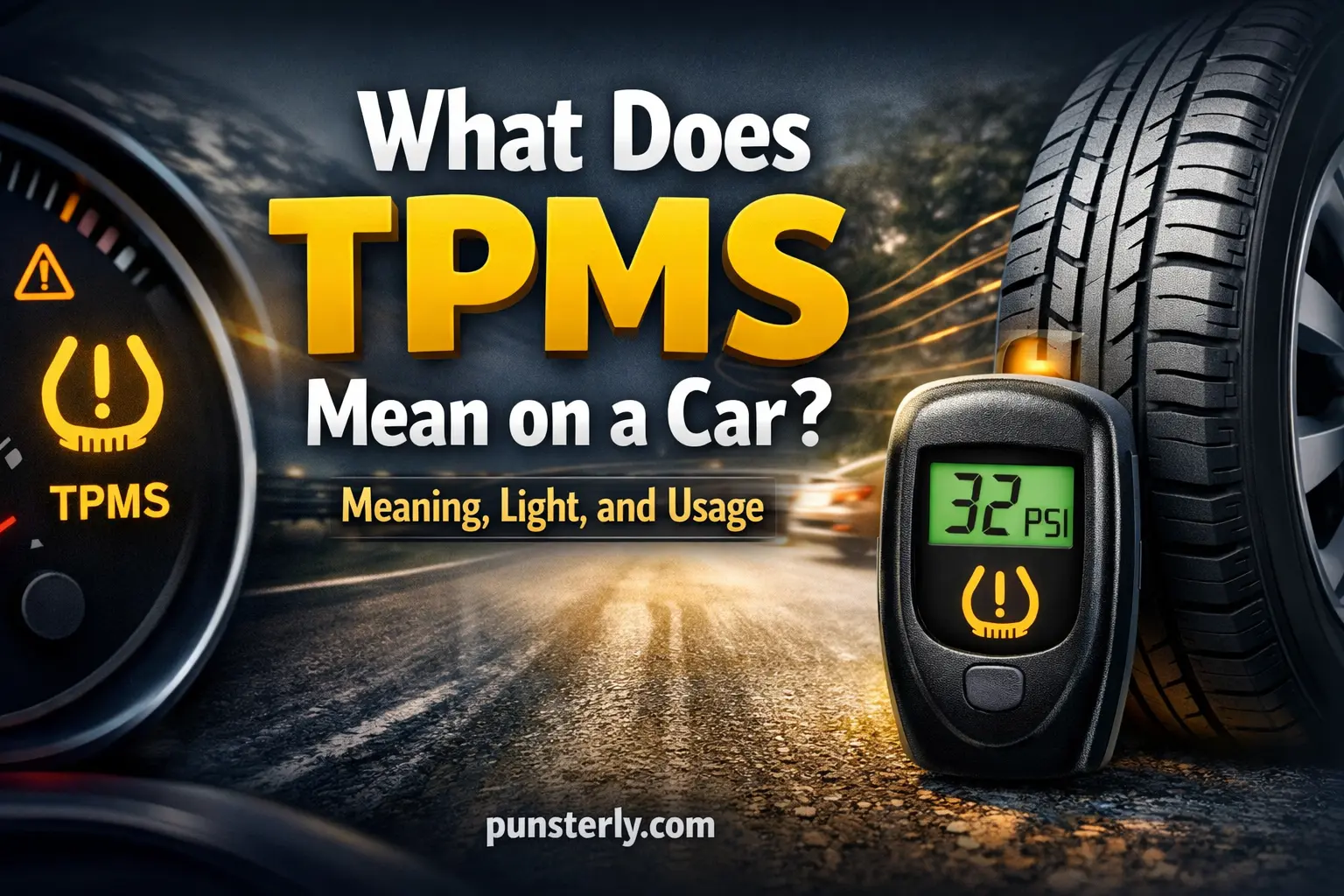
If you see TPMS on your dashboard, it usually means your car is warning you about tire pressure. Some vehicles show the letters “TPMS,” while others show a yellow symbol that looks like a tire with an exclamation point. Either way, the message matters because tire pressure affects safety, tire wear, and how your car feels on the road.
In this guide, you will learn what TPMS means, what the light is trying to tell you, how the system works, and what to do next. You will also see common mistakes, simple examples, and answers to the most common questions drivers ask.
QUICK ANSWER
TPMS means Tire Pressure Monitoring System. On a car, it is the system that warns you when one or more tires are too low or when the monitoring system itself may have a problem. In the U.S., TPMS has been required on new light vehicles since the 2008 model year.
TL;DR
• TPMS stands for Tire Pressure Monitoring System.
• It warns you about low tire pressure.
• A solid light often means low pressure.
• A flashing light often means a system fault.
• It does not replace manual tire checks.
• Reset steps vary by vehicle model.
What TPMS Means in Plain English
TPMS is short for Tire Pressure Monitoring System. In plain English, it is your car’s built-in tire pressure alert system. Its job is to let you know when the air pressure in a tire drops far enough to need attention.
This is a technical automotive term, not slang and not a general English phrase. People usually see it on the dashboard, in the owner’s manual, or during tire service.
Part of speech:
TPMS is an acronym and functions like a noun.
Example: “My TPMS light came on this morning.”
What the TPMS Light Is Telling You
A solid TPMS light usually means one or more tires are underinflated. Some sources also note that unusually high pressure can trigger the system on certain vehicles, but low pressure is the most common meaning.
A flashing TPMS light usually means the system itself has a problem. For example, a sensor may not be communicating, a sensor battery may be weak, or the system may need service. NHTSA says a flashing sequence followed by a steady light is a common malfunction warning.
Common mistake:
Many drivers think TPMS always means a flat tire.
Correction: It can mean low pressure, but a flashing light often points to a system fault instead.
How TPMS Works in a Car
TPMS monitors tire pressure and sends a warning when pressure drops below a set threshold. Federal rules for light vehicles require a warning when pressure falls 25% or more below the vehicle maker’s recommended cold tire pressure.
In many vehicles, the system uses sensors in the wheels. Those sensors send pressure data to the car, and the dashboard light turns on when the system detects a problem. Some newer vehicles also show the pressure for each tire on a screen.
Direct vs. Indirect TPMS
There are two main types of TPMS: direct and indirect. A direct system uses pressure sensors inside each wheel. An indirect system does not measure tire pressure directly. Instead, it uses wheel-speed data through systems such as ABS to notice when one tire behaves differently.
Direct TPMS is usually more precise. Indirect TPMS can work well too, but it may need recalibration after tire rotation, tire replacement, or pressure adjustment, depending on the vehicle.
| Context | Best Choice | Why |
| You want exact pressure readings | Direct TPMS | It uses wheel sensors |
| You want fewer hardware sensors | Indirect TPMS | It uses existing wheel-speed data |
| You just rotated tires | Check system type first | Reset needs can differ |
Where You Might See TPMS
Most people first notice TPMS on the dashboard. The warning may appear as the letters TPMS, a tire-shaped symbol with an exclamation point, or a message on the instrument screen.
You may also see the term in:
• the owner’s manual
• tire service paperwork
• a vehicle settings menu
• a service message after a sensor issue
When to Use the Term TPMS
Use TPMS when you are talking about the car’s tire-pressure warning system as a whole. It fits best in driving, maintenance, repair, and dashboard-warning contexts.
Examples:
• “The TPMS light came on during my drive home.”
• “The shop checked the TPMS sensors when they changed my tires.”
• “My car says TPMS, so I need to check tire pressure first.”
When Not to Assume It Only Means a Flat Tire
TPMS does not always mean you have a puncture. Sometimes the light turns on because of a temperature drop, a weak sensor battery, a missing or damaged sensor, or a system problem after tire service.
That is why a visual check alone is not enough. A tire can look normal and still be low. On the other hand, if the light flashes first, the system may need diagnosis even if the tires are properly inflated.
Common Examples and Real-Life Situations
A cold morning is a common example. NHTSA says the TPMS symbol may come on briefly when overnight temperatures lower tire pressure and then go off after the tires warm up.
Another common situation is after tire rotation or replacement. Some vehicles need the system reset or relearned after service. A flashing light can also appear if the system cannot read one of the sensors correctly.
Related Terms People Confuse With TPMS
People often confuse TPMS with PSI. They are not the same. TPMS is the monitoring system. PSI is the pressure unit used to measure air in the tires.
Drivers also confuse TPMS with the general low tire pressure light. In everyday use, they are closely related, but TPMS refers to the system, while the light is the warning it gives you. Some vehicles show the symbol, some show text, and some show both.
Synonyms:
There is no perfect everyday synonym for TPMS. The closest match is tire pressure monitoring system written out in full.
Antonyms:
A true antonym does not really fit here because TPMS names a system, not an opposite concept.
Common Mistakes
One mistake is adding air based on the number printed on the tire sidewall. The better guide for everyday driving is the vehicle maker’s recommended cold pressure, usually found on the driver’s door placard or in the manual.
Another mistake is assuming the warning will always turn off right away. Some vehicles need a short drive, a reset, or a relearn procedure after you correct the pressure. The exact steps depend on the car.
A third mistake is treating TPMS as a full replacement for manual checks. Several reputable tire sources say it is a helpful warning system, but you should still check tire pressure yourself regularly.
Mini Quiz
1) What does TPMS stand for?
Tire Pressure Monitoring System.
2) What does a solid TPMS light usually mean?
One or more tires likely need pressure checked.
3) What does a flashing TPMS light often mean?
The monitoring system may have a fault.
4) Is TPMS slang?
No. It is a technical car term.
5) Does TPMS replace manual tire checks?
No. You should still check pressure yourself.
FAQ
What does TPMS mean on a car dashboard?
It means Tire Pressure Monitoring System. Your car is warning you that a tire may be low or that the system may need attention. The exact message depends on whether the light is solid or flashing.
Is it safe to drive with the TPMS light on?
Usually, you should slow down, avoid long driving until you check the tires, and inspect pressure as soon as you can do so safely. If the tire looks very low, pull over and deal with it right away. If the light is flashing, the system itself may need service.
Why is my TPMS light on but my tires look fine?
A tire can be low without looking obviously flat. Other possible causes include cold weather, a weak sensor battery, a damaged sensor, or a system issue after tire service.
What is the difference between a solid and flashing TPMS light?
A solid light usually means pressure is low in one or more tires. A flashing light, often for about 60 to 90 seconds before staying on, usually points to a malfunction in the system.
Can cold weather turn on the TPMS light?
Yes. Lower temperatures can reduce tire pressure enough to trigger the warning. NHTSA notes that the light may come on during cold mornings and then turn off after the tires warm up.
How do I reset a TPMS light?
There is no single reset method for every car. Some vehicles reset after correct inflation and a short drive, while others need a button sequence or a relearn process. The owner’s manual is the safest guide for your model.
Is TPMS required on all cars?
In the United States, TPMS has been required on new light vehicles since the 2008 model year. Earlier vehicles may or may not have it.
CONCLUSION
Now you know what TPMS mean on a car usually points to: your tire pressure warning system. Check the pressure first, then look at whether the light is solid or flashing. That simple next step can help you decide whether you need air, a reset, or a repair.
