
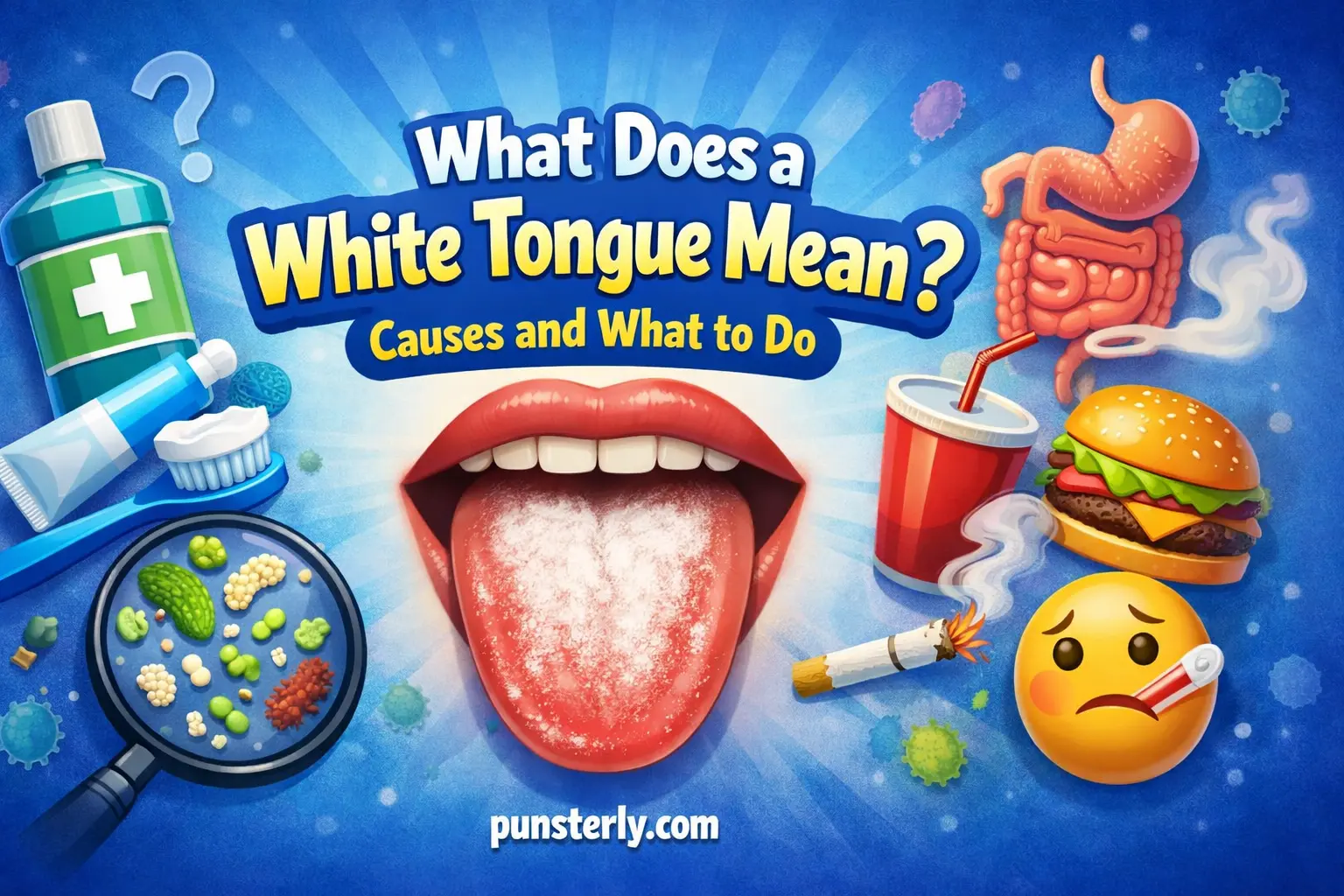
People often search this phrase after seeing a pale coating or white patches on their tongue. It can look strange, especially if it appears suddenly or seems thicker than usual.
In many cases, a white tongue is linked to trapped debris, bacteria, and dead cells on the tongue’s surface. But sometimes it points to a specific mouth condition, such as thrush, leukoplakia, or oral lichen planus.
This guide explains what a white tongue means in plain English, what usually causes it, what may help, and when it is smart to get it checked. Because this topic overlaps with health symptoms, it is best used as general education, not as a self-diagnosis.
Quick Answer
What does a white tongue mean? Most often, it means the surface of the tongue is coated with trapped bacteria, food debris, dead cells, or yeast. It is often harmless, but white patches that last, hurt, or do not wipe away may need medical or dental attention.
TL;DR
• A white tongue often means surface buildup.
• Dry mouth and dehydration can make it worse.
• Thrush can cause creamy white patches.
• Persistent patches need professional evaluation.
• A white tongue is a symptom, not a diagnosis.
• Pain, sores, or swallowing trouble are warning signs.
What a White Tongue Means in Plain English
In plain English, a white tongue usually means your tongue has a white coating instead of its usual pink look. That coating often forms when tiny bumps on the tongue hold onto debris, bacteria, and dead cells.
This phrase is a general symptom phrase, not a formal diagnosis by itself. In other words, “white tongue” describes what you see. It does not automatically tell you the exact cause.
What It Can Look Like
A white tongue may look like a thin film across the surface. It may also show up as thicker coating, patchy white areas, or a heavier layer toward the back of the tongue.
Some people also notice bad breath, a bad taste, dryness, or mild soreness. Others notice the color change without any pain at all.
A common mistake is to assume every white area means the same thing. A removable coating is different from a thick patch that stays in place.
Common Causes of a White Tongue
The most common causes are poor oral hygiene, dry mouth, dehydration, mouth breathing, and irritation that lets material build up on the tongue. Smoking and heavy alcohol use can also play a role.
A white tongue can look worse when the tongue’s surface bumps become swollen. That makes it easier for bacteria, food particles, and dead cells to collect between them.
Sometimes a white tongue is linked to a broader health issue. The NHS notes that conditions such as anemia, oral thrush, leukoplakia, geographic tongue, lichen planus, and ulcers can be involved.
Conditions That Can Cause White Patches
Oral thrush is a yeast infection that can cause creamy white lesions on the tongue or inner cheeks. It is more likely in some people, including those using certain medicines or those with some health conditions.
Leukoplakia can cause thick white patches in the mouth, including on the tongue. Mayo Clinic says these patches usually cannot be scraped off and may be linked to irritation; some cases can involve precancerous change.
Oral lichen planus can cause white, lacy patches inside the mouth and sometimes on the tongue. These areas may be painless, or they may come with soreness or open areas.
A common mistake is to call every white patch “thrush.” That is not always correct. Thrush, leukoplakia, and lichen planus can look different and may need different care.
White Tongue in the Morning
A white tongue is often more noticeable in the morning. One reason is that saliva flow drops while you sleep, so debris can sit on the tongue longer. Dry mouth or sleeping with your mouth open can add to that effect.
That morning coating does not always mean something serious. But if it stays all day, keeps coming back, or comes with pain or thick patches, it deserves more attention.
What Usually Helps
Good oral care often helps when the cause is simple coating or buildup. That usually means brushing your teeth well, gently cleaning your tongue, and drinking enough fluids.
It also helps to reduce things that dry or irritate the mouth. Examples include tobacco, heavy alcohol use, and ongoing mouth breathing when possible.
If the cause is a condition like thrush, home care alone may not be enough. Treatment depends on the cause, so a doctor or dentist may suggest antifungal treatment or further evaluation.
When a White Tongue Needs Medical Attention
Get medical or dental advice if the white areas do not improve, do not scrape away, or come with pain, open sores, trouble chewing, trouble swallowing, fever, rash, or unexplained weight loss. These are stronger reasons to get checked.
Persistent white patches matter because some mouth conditions need treatment, and a few need closer follow-up. Mayo Clinic and MSD Manual both note that leukoplakia and some other persistent mouth changes may need evaluation, and sometimes biopsy, depending on appearance and cause.
Is “White Tongue” a Medical Term or a General Phrase?
“White tongue” is best understood as a general descriptive phrase. It tells you what the tongue looks like, not the exact reason it looks that way.
In everyday English, people use the phrase when they notice a white coating, white patches, or an unusual pale layer on the tongue. In healthcare settings, a clinician usually looks deeper and tries to identify the specific cause behind that appearance.
Part of speech: this phrase functions as a noun phrase. Example: “A white tongue can happen with dry mouth.” It is not slang. It is also not a formal disease name on its own.
Related Terms People Confuse With It
People often mix up white tongue, coated tongue, oral thrush, and leukoplakia. They are related, but they do not all mean the same thing.
• White tongue / coated tongue: broad description of the look
• Oral thrush: yeast infection with white lesions
• Leukoplakia: thick white patch that often does not scrape off
• Oral lichen planus: white lacy patches from ongoing inflammation
Synonyms: There is no perfect exact synonym, but white-coated tongue and coated tongue are close in many contexts.
Antonyms: There is no strong true antonym in normal use. A phrase like healthy pink tongue is descriptive, not a strict antonym.
Small Comparison Table
| Context | Best Choice | Why |
| Thin coating that improves with cleaning | White-coated tongue | Often simple buildup |
| Creamy white lesions with soreness | Oral thrush | May be yeast-related |
| Thick patch that does not scrape off | Get checked | Could need evaluation |
| Lacy white pattern in mouth | Oral lichen planus | Often a different condition |
The main mistake is using one label for every white change in the mouth. The pattern matters. Whether it wipes away, hurts, or lasts also matters.
Examples of How People Use the Phrase
Here are common plain-English examples:
• “I woke up with a white tongue this morning.”
• “Does a white tongue mean dehydration?”
• “My tongue has white patches that will not go away.”
• “I cleaned my tongue, but the white coating stayed.”
These examples show how people usually use the phrase: as a symptom question, not as a final diagnosis.
Mini Quiz
1) Does “white tongue” name one exact disease?
No. It describes an appearance, not one exact diagnosis.
2) What is the most common simple reason for a white tongue?
Surface buildup from debris, bacteria, and dead cells.
3) Can dehydration make it worse?
Yes. Dry mouth and lower saliva can make coating more noticeable.
4) What kind of white area should be checked?
A patch that lasts, hurts, or does not scrape off.
5) Is oral thrush the same as every white tongue?
No. Thrush is only one possible cause.
FAQ
Is a white tongue usually serious?
Usually not. Cleveland Clinic and Mayo Clinic both indicate it is often harmless, especially when it is just a coating. But persistent or unusual white patches should be checked.
Can dehydration cause a white tongue?
It can contribute. Lower saliva and a dry mouth make it easier for debris and bacteria to collect on the tongue.
How do you get rid of a white tongue?
It depends on the cause. Better oral care, gentle tongue cleaning, and hydration often help simple coating, while conditions like thrush may need professional treatment.
Does a white tongue mean oral thrush?
Not always. Thrush is one possible cause, but a white tongue can also come from buildup, dry mouth, leukoplakia, or other conditions.
When should I see a doctor or dentist?
Get checked if the white area lasts, comes with pain, sores, swallowing trouble, fever, or does not wipe away. Those details matter more than the color alone.
Can a white tongue be caused by poor oral hygiene?
Yes. This is one of the most common reasons. When the tongue is not cleaned well, debris and bacteria can collect on its surface.
Is white tongue contagious?
The coating itself is not a contagious condition. But if the cause is an infection, such as thrush, the right next step depends on the full situation and the person’s health background.
Conclusion
What does a white tongue mean? Most often, it means there is a coating or patch on the tongue caused by buildup, dryness, or a mouth condition.
The key is not to guess from color alone. Notice whether it wipes away, how long it lasts, and whether pain or other symptoms are present.
