
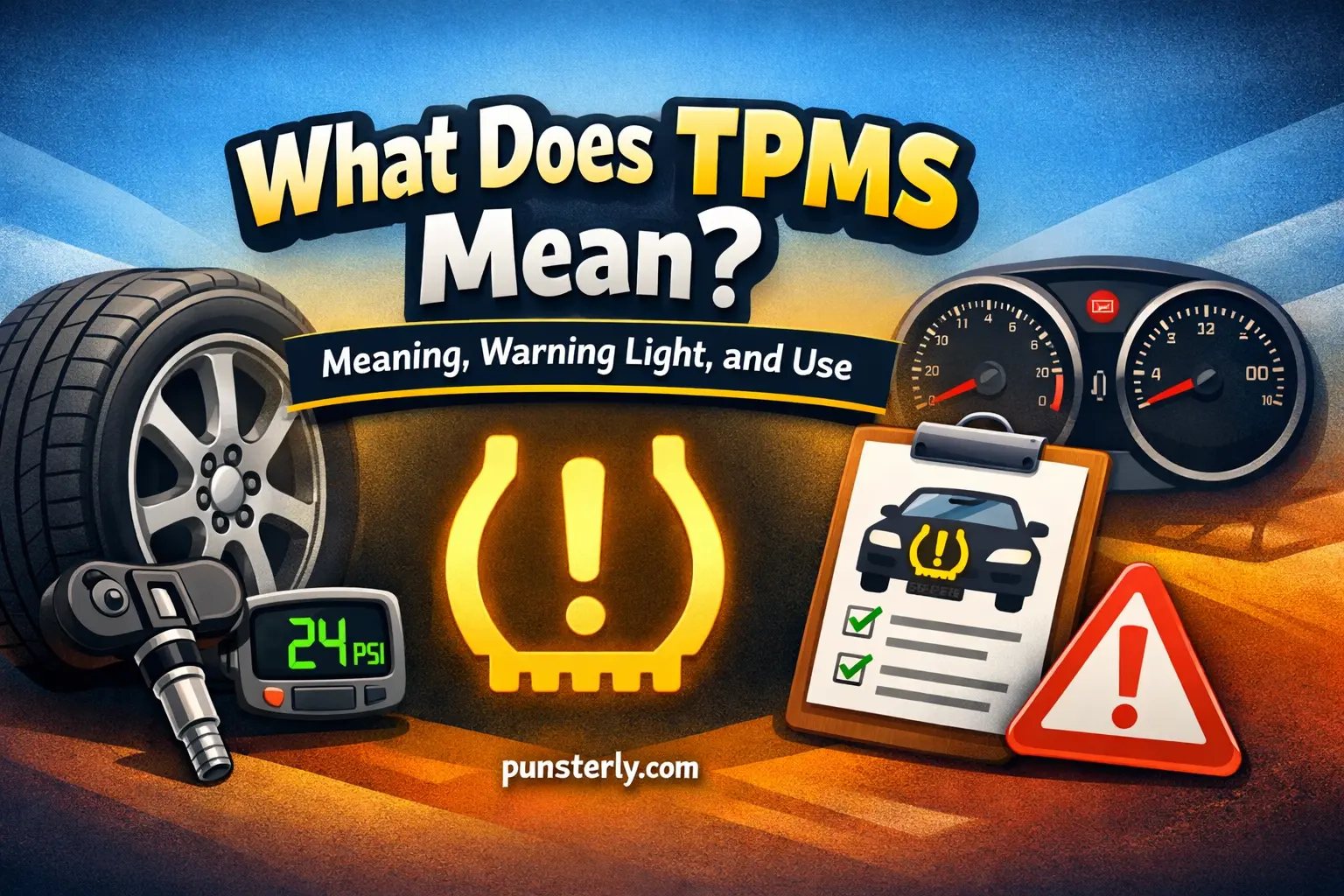
If you drive, you have probably seen TPMS on a dashboard, in a car manual, or at a tire shop. It looks technical, but the meaning is simple once you break it down.
TPMS matters because it is tied to tire safety. It helps warn you when a tire may be too low on air. That can affect grip, braking, fuel use, and tire wear.
This guide explains what TPMS means, how people use the term, what the warning light usually means, and what to do next. It also clears up common mix-ups, including the difference between a solid light and a flashing one.
Quick Answer
TPMS means Tire Pressure Monitoring System. It is your vehicle’s built-in system that warns you when one or more tires may be too low on air.
TL;DR
• TPMS stands for Tire Pressure Monitoring System.
• It is a car safety term, not slang.
• It usually warns about low tire pressure.
• A solid light often means low pressure.
• A flashing light often means a system problem.
• Check tire pressure before trying a reset.
TPMS Meaning in Plain English
TPMS is short for Tire Pressure Monitoring System.
In plain English, it is the part of a vehicle that watches tire pressure and alerts the driver when something seems wrong. Most people see it as a dashboard light, but the term really names the full system.
So if someone asks, “What does TPMS mean?” the clearest answer is this: it is the car system that helps warn you about tire pressure problems.
What TPMS Refers to in Real Life
People use TPMS in a few related ways. That is why the term can feel confusing at first.
Sometimes it means the full system inside the car. Sometimes it means the warning light on the dashboard. Sometimes people also use it when talking about a TPMS sensor during tire service.
Here is the easy way to think about it:
• TPMS system = the whole pressure-monitoring setup
• TPMS light = the dashboard warning symbol
• TPMS sensor = the part that helps detect pressure or pressure loss
In normal conversation, all three uses are common.
Pronunciation and Word Type
TPMS is usually said letter by letter:
tee-pee-em-ess
It is an initialism, which means each letter is spoken separately. It is not usually said like one word.
As a word type, TPMS is a noun. More exactly, it is an abbreviated technical noun used in the auto world.
Example:
• “My TPMS came on this morning.”
• “The mechanic checked the TPMS after the tire change.”
How TPMS Works
TPMS watches for tire pressure problems and tells the driver when pressure drops too far.
In many vehicles, the system uses sensors to track pressure in each tire. In others, it uses wheel-speed data to estimate when one tire is lower than the others.
Either way, the goal is the same: warn the driver before a low tire becomes a bigger problem.
A common mistake is thinking TPMS replaces manual tire checks. It does not. It is a warning system, not a full substitute for routine checks.
Direct vs. Indirect TPMS
There are two main kinds of TPMS.
Direct TPMS
Direct TPMS uses sensors inside the tires. These sensors monitor actual pressure and send that information to the vehicle.
This type is usually more precise. Some vehicles with direct TPMS can even show the pressure for each tire on a screen.
Indirect TPMS
Indirect TPMS does not directly measure air pressure. Instead, it uses wheel-speed data to spot a difference that may suggest one tire is low.
This type is simpler, but it may be less exact. It can also need recalibration after tire service or a rotation.
Here is a quick comparison:
| Context | Best Choice | Why |
| You want actual tire pressure readings | Direct TPMS | It reads pressure more directly |
| You want a simpler warning setup | Indirect TPMS | It uses vehicle data instead of in-tire sensors |
What the TPMS Light Usually Means
Most drivers care about TPMS because of the warning light.
A solid TPMS light usually means one or more tires are low on air. That is the most common meaning.
A flashing TPMS light often points to a problem with the system itself. That may mean a sensor issue, a communication problem, or a system fault.
The symbol often looks like a horseshoe shape with an exclamation point inside. On some vehicles, you may also see the letters TPMS.
Cold weather can also trigger the light. When air gets colder, tire pressure can drop enough to set off the warning.
What to Do When You See TPMS
Start with the simple step: check your tire pressure.
Use the recommended pressure listed on the driver’s door sticker or in the owner’s manual. Do not use the number printed on the tire sidewall as your target.
Then follow these steps:
• Park safely
• Check all four tires
• Check the spare if your vehicle uses a monitored spare
• Add air if needed
• Recheck pressure when the tires are cold
• Drive a short distance if your vehicle needs time to update
If the light stays on after the tires are properly inflated, your system may need recalibration or service.
A common mistake is resetting the light before checking the tires. That can hide the warning without fixing the real issue.
When Not to Ignore the Warning
TPMS should not cause panic, but it should not be ignored.
A low tire can affect handling, braking, tire life, and fuel use. If a tire is very low, driving farther can make things worse.
Pay closer attention when:
• the car feels unstable
• one tire looks visibly low
• the light comes on during highway driving
• the light flashes at startup
• the light stays on after you add air
If anything feels unsafe, stop driving and inspect the tires.
Related Terms and Common Confusions
TPMS is often confused with other tire and dashboard terms.
TPMS vs. low tire pressure light
These are often the same warning in everyday use. The light is usually the visible sign of the TPMS system.
TPMS vs. tire pressure gauge
A tire pressure gauge is the tool you use to measure pressure yourself. TPMS is the system inside the vehicle.
TPMS vs. TPS
These are not the same. TPS often refers to a different car term, depending on the context. Do not assume they mean the same thing.
Is TPMS slang?
No. TPMS is not slang. It is a technical auto abbreviation used in manuals, repair shops, and dashboard warnings.
Synonyms and antonyms
There is no perfect everyday synonym for TPMS. The closest clear match is:
• tire pressure monitoring system — full form
• tire pressure warning system — close but less exact
A true antonym does not really fit here, because TPMS names a vehicle system, not an opposite idea.
Mini Quiz
Test yourself with these quick questions.
- What does TPMS stand for?
- Is TPMS a slang term or a technical car term?
- What does a solid TPMS light usually mean?
- What does a flashing TPMS light often suggest?
- Should you check the door sticker or the tire sidewall for target pressure?
Answer Key
- Tire Pressure Monitoring System
- A technical car term
- One or more tires may be low
- A system or sensor problem
- The door sticker
FAQs
What does TPMS mean on a car?
TPMS means Tire Pressure Monitoring System. It is the system that alerts you when tire pressure may be too low.
Does TPMS always mean low tire pressure?
Not always. A solid light often points to low pressure, but a flashing light can mean the system itself has a problem.
What does a flashing TPMS light mean?
It often means the system is not working correctly. A sensor, battery, or communication issue may be involved.
Is it safe to drive with the TPMS light on?
Sometimes you can drive a short distance, but you should check the tires as soon as possible. If a tire looks very low or the car feels unsafe, stop and inspect it right away.
How do I reset my TPMS light?
That depends on the vehicle. Some cars reset on their own after the pressure is corrected, while others need a relearn or manual reset step.
Do all cars have TPMS?
Most newer passenger vehicles in the United States do. Many drivers became familiar with it on vehicles from the 2008 model year and later.
Do spare tires have TPMS sensors?
Some do, but many do not. That is why a spare can sometimes affect the warning in ways drivers do not expect.
Conclusion
TPMS means Tire Pressure Monitoring System, and it is there to help you catch tire pressure problems early.
Once you know what the term means, the warning becomes much easier to understand. The next time you see TPMS, check the tires first and use your owner’s manual for model-specific steps.
