
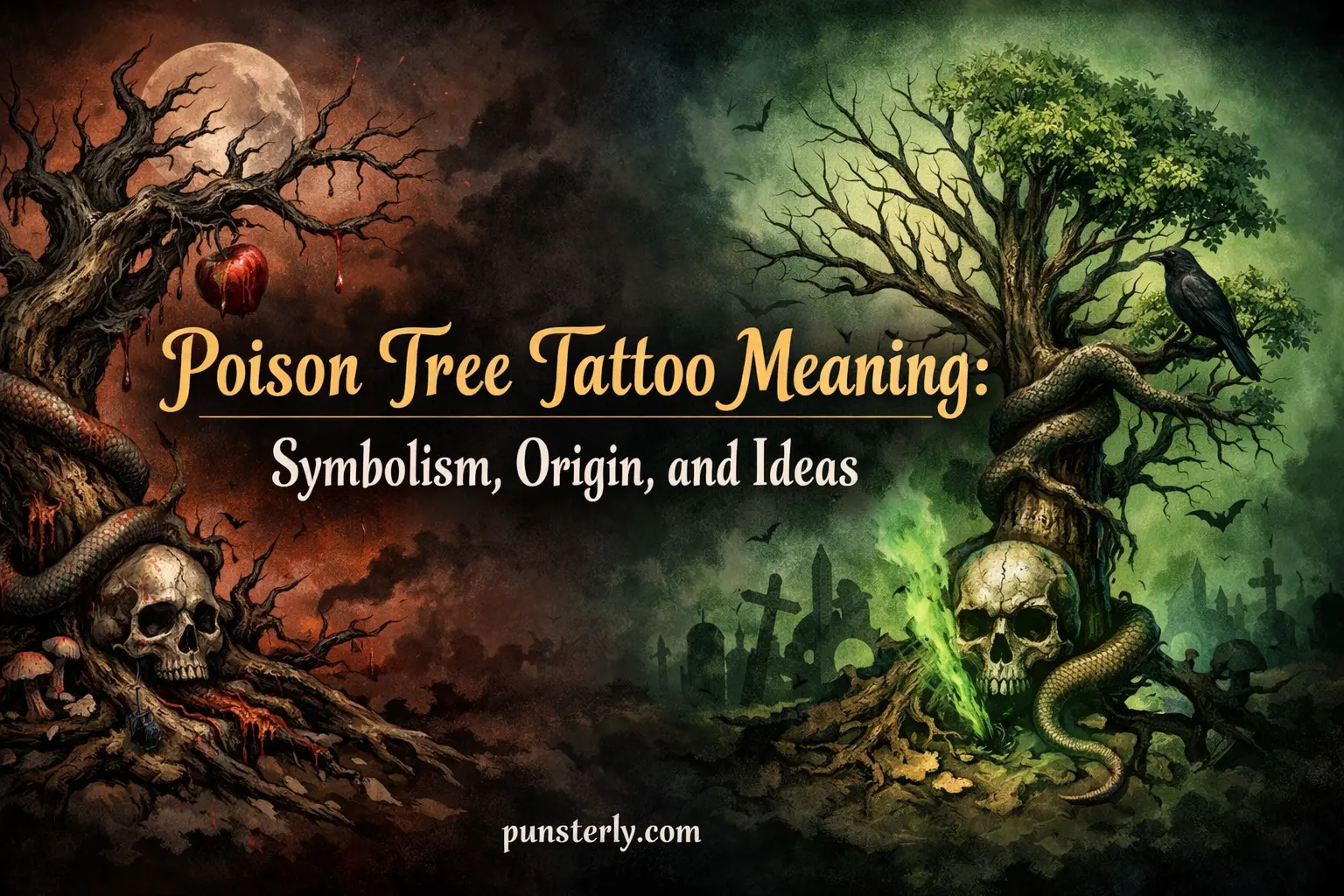
A poison tree tattoo usually carries a deep emotional message. Most often, it stands for hidden anger, betrayal, resentment, or the damage that can grow when feelings stay locked inside. For many people, it is not just a dark-looking tattoo. It is a personal symbol with a story behind it.
This tattoo is also strongly connected to William Blake’s famous poem A Poison Tree. Because of that link, the design often suggests more than danger alone. It can represent revenge, emotional pain, silence, self-reflection, or even healing after a hard experience.
In this guide, you will learn what a poison tree tattoo usually means, where the idea comes from, what different designs can suggest, and how the meaning can change from one person to another.
Quick Answer
Poison tree tattoo meaning usually refers to hidden anger, resentment, betrayal, or emotional pain that grows over time. It is often inspired by William Blake’s poem A Poison Tree, but some people also use it as a symbol of healing, awareness, and letting go.
TL;DR
• Usually linked to hidden anger or resentment
• Commonly inspired by William Blake’s A Poison Tree
• Can symbolize betrayal and revenge
• May also represent healing and self-awareness
• Design details can change the message
• Personal meaning matters most
What Does a Poison Tree Tattoo Mean in Plain English?
In simple terms, a poison tree tattoo usually means that painful emotions can grow into something harmful when they are ignored. The “tree” represents something that has been fed over time. That could be anger, jealousy, bitterness, hurt, or distrust.
For many people, this tattoo is a warning. It reminds them that silence and resentment can become destructive. For others, it marks a turning point in life, showing they have faced those feelings and moved beyond them.
Where Does the Poison Tree Tattoo Meaning Come From?
The meaning mostly comes from William Blake’s poem A Poison Tree. In the poem, the speaker says that anger shared openly ended, but anger hidden away kept growing. That anger later became a poisonous tree bearing an apple.
Because of this story, the tattoo often symbolizes emotions that are buried instead of expressed. It also suggests that something beautiful on the outside can still hold danger underneath.
The William Blake Connection
This tattoo is popular with people who love literary symbols. Blake’s poem gives the image a strong emotional and moral meaning. It is not just about a tree. It is about what happens when bitterness grows in secret.
That is why many poison tree tattoos include a single apple, dark roots, bare branches, or twisted limbs. These details point back to the poem and make the design feel more layered and meaningful.
Main Symbolic Meanings of a Poison Tree Tattoo
A poison tree tattoo can hold several meanings at once. These are the most common ones.
Hidden Anger
This is the clearest and most common meaning. The tattoo may stand for anger that stayed inside too long.
Resentment
Some people choose this design to reflect emotional hurt they carried for years. The tree becomes a symbol of bitterness that kept growing.
Betrayal
The tattoo can also represent broken trust. In this meaning, it may be tied to a painful friendship, family issue, or relationship.
Revenge
Because Blake’s poem ends in harm, the tattoo can sometimes point to revenge or the consequences of silent hatred.
Emotional Warning
For many wearers, the tattoo serves as a warning to speak honestly and not let pain turn toxic.
Healing and Growth
Not every poison tree tattoo has a negative meaning. Some people use it to show they survived a dark chapter and learned from it.
Is Poison Tree Tattoo Meaning Always Negative?
No, not always. While the symbol often begins with anger or pain, it does not have to stay there. Some people wear it as a reminder of what they overcame. Others use it as a sign of emotional honesty and personal growth.
That is why context matters so much. One person may see the tattoo as a symbol of revenge. Another may see it as a symbol of healing after betrayal.
What Emotions Does This Tattoo Usually Represent?
This tattoo often connects to strong inner feelings. These may include:
• anger
• bitterness
• sadness
• betrayal
• jealousy
• silence
• regret
• emotional growth
The exact emotion depends on the design, the wearer’s story, and what they want the tattoo to say.
Poison Tree Tattoo Meaning in Relationships
In relationship settings, this tattoo often points to pain caused by silence, mistrust, or betrayal. It can represent a relationship that looked fine on the outside but carried hidden hurt underneath.
Some people choose this tattoo after heartbreak. Others get it after learning to stop holding onto anger. In that sense, the tattoo can represent both the wound and the lesson.
Poison Tree Tattoo Meaning in a Spiritual Sense
Some people give the tattoo a spiritual meaning, though this depends more on personal belief than on one fixed tradition. In that reading, the poison tree may symbolize inner darkness, emotional poison, or the need to clear bitterness from the heart.
It may also stand for self-awareness. The tattoo can remind the wearer to notice harmful thoughts before they take root.
What the Apple in a Poison Tree Tattoo Can Mean
The apple is one of the most powerful details in this symbol. In Blake’s poem, the apple is attractive but dangerous. That gives it a layered meaning.
A poison apple in the tattoo can suggest:
• temptation
• hidden danger
• deceptive beauty
• emotional bait
• harmful desire
If a poison tree design includes an apple, it often makes the literary meaning stronger.
What the Tree Itself Symbolizes
The tree is not random. Trees usually represent growth, life, roots, or time. In this tattoo, the tree carries a darker twist.
Here, the tree may symbolize:
• emotions growing over time
• something buried deep inside
• damage spreading slowly
• pain with strong roots
• a private struggle that became visible
This is what makes the symbol so powerful. It takes the usual image of growth and turns it into a warning.
Common Poison Tree Tattoo Designs and Their Meaning
Different design choices can slightly shift the message of the tattoo.
Bare Tree
A leafless or dead-looking tree often suggests emotional damage, loneliness, or inner emptiness.
Tree With One Apple
This strongly points to Blake’s poem and often highlights temptation, revenge, or hidden danger.
Twisted Roots
Roots can suggest pain buried deep in the past. They may also represent unresolved trauma or memory.
Broken Branches
Broken limbs often symbolize emotional scars, betrayal, or survival after hardship.
Dark Ink Style
A very dark style can make the tattoo feel more serious, haunting, or intense.
Soft or Artistic Style
A gentler design can shift the meaning toward reflection, healing, and personal growth.
Poison Tree Tattoo Meaning for Men and Women
The meaning itself does not change based on gender. A poison tree tattoo can carry the same emotional weight for anyone. Still, the design style may differ from person to person.
Some may choose a rough, bold look with dark shading. Others may prefer a softer or more poetic design. The core meaning usually stays rooted in emotional truth, hidden pain, or personal transformation.
Is Poison Tree Tattoo Meaning Literary, Emotional, or Personal?
The answer is often all three.
It is literary because it usually links back to William Blake. It is emotional because it deals with anger, betrayal, and pain. It is personal because each wearer brings their own story to the symbol.
That mix is exactly why the tattoo stands out. It feels thoughtful, expressive, and deeply individual.
Part of Speech and Usage Note
“Poison tree tattoo meaning” is not a single dictionary word. It is a search phrase and a noun phrase used to ask about tattoo symbolism.
For example:
• “I searched poison tree tattoo meaning before getting mine.”
• “Her tattoo artist explained the poison tree tattoo meaning.”
In everyday English, people use the phrase when they want to understand what the tattoo stands for.
Related Symbols People Often Confuse With It
A poison tree tattoo can overlap with other dark or symbolic tattoo ideas, but it is not exactly the same as these:
• Poison apple tattoo — often focuses more on temptation or danger
• Forbidden fruit tattoo — often leans more biblical or moral
• Dead tree tattoo — often suggests endings, grief, or emptiness
• Tree of life tattoo — usually carries a much more positive meaning
• Snake and apple tattoo — often points more directly to temptation
These symbols may look similar, but the poison tree tattoo usually carries a more specific meaning tied to emotional buildup and hidden harm.
Synonyms and Opposite Ideas
There are no exact synonyms because this is a symbolic tattoo phrase, not a single dictionary term. Still, close idea matches may include:
• hidden anger
• emotional poison
• buried resentment
• toxic silence
• inner bitterness
There is no exact antonym either, but opposite ideas could include:
• peace
• honesty
• release
• healing
• emotional clarity
When This Tattoo May Be the Right Choice
This tattoo may fit well if you want a design that feels personal, thoughtful, and layered. It can work for someone who values poetry, symbolism, emotional honesty, or meaningful body art.
It may also fit if you want a design that reflects survival, lessons learned, or a reminder not to let old pain take control.
| Context | Best Choice | Why |
| You want a symbol of hidden anger | Poison tree tattoo | It strongly reflects buried emotion |
| You want a literary tattoo | Poison tree tattoo | It connects clearly to Blake’s poem |
| You want a betrayal symbol | Poison tree tattoo | It fits pain, silence, and resentment |
| You want a healing reminder | Poison tree tattoo with softer details | The message can shift toward growth |
| You want a cheerful tattoo | Another symbol may fit better | This design usually feels heavy |
| You want simple danger symbolism | Another design may fit better | Poison tree carries emotional depth |
When This Tattoo May Not Be the Best Fit
This design may not be ideal if you want something light, playful, or easy for everyone to understand at a glance. The meaning is deeper and darker than many common tree tattoos.
It may also not fit if you do not want people asking questions. Because the symbol feels unusual and layered, it often invites curiosity.
Common Mistakes About Poison Tree Tattoo Meaning
People often misunderstand this symbol. Here are a few common mistakes.
• Mistake: It just means danger. Fix: It usually means hidden emotion and consequence.
• Mistake: It is only about revenge. Fix: It can also mean healing and self-awareness.
• Mistake: It is the same as any dead tree tattoo. Fix: It often has a specific literary link.
• Mistake: The apple is only decorative. Fix: It can be a major part of the meaning.
• Mistake: It always has one fixed interpretation. Fix: Personal story changes the reading.
Real-Life Examples of How People Explain This Tattoo
These examples show how the phrase may sound in everyday life.
• “My poison tree tattoo is about anger I kept hidden.”
• “It reminds me not to let resentment grow.”
• “Mine is based on Blake’s poem and what it says about silence.”
• “The apple in my design stands for beauty hiding danger.”
• “I got it after a betrayal, but now it means healing to me.”
Why People Find This Tattoo So Powerful
This tattoo stands out because it is emotional without being obvious. It does not simply say “pain” or “anger.” It shows how those feelings grow, change, and affect a person over time.
It is also powerful because it mixes beauty and darkness. A tree can look calm and elegant, but the meaning behind it can be intense and deeply personal.
FAQ
What does a poison tree tattoo mean?
It usually means hidden anger, resentment, betrayal, or emotional pain that has grown over time. Some people also use it as a symbol of healing and emotional truth.
Is a poison tree tattoo about revenge?
Sometimes, yes. That reading comes from William Blake’s poem. But many people use the tattoo as a warning against revenge rather than support for it.
Is the poison tree tattoo connected to William Blake?
Yes, in most cases. The tattoo is very often inspired by Blake’s poem A Poison Tree, which gives the design its strongest symbolic meaning.
Can a poison tree tattoo mean healing?
Yes. Some wearers use it to show they learned from anger, pain, or betrayal and chose a healthier path.
Does the apple matter in the design?
Yes, very often. The apple can symbolize temptation, hidden danger, or the direct link to Blake’s poem.
Is this tattoo only for people who like poetry?
No. The literary connection helps, but many people choose it simply because the meaning feels personal and honest.
Is poison tree tattoo meaning the same for everyone?
No. The common themes stay similar, but the exact meaning depends on the design and the wearer’s own story.
Mini Quiz
1) What is the most common meaning of a poison tree tattoo?
Hidden anger or resentment.
2) What poem is it often linked to?
A Poison Tree by William Blake.
3) Can the tattoo also mean healing?
Yes.
4) What can the apple symbolize?
Temptation or hidden danger.
5) Is it the same as a regular tree tattoo?
No.
Answer Key:
- Hidden anger or resentment
- A Poison Tree
- Yes
- Temptation or hidden danger
- No
Conclusion
Poison tree tattoo meaning usually centers on hidden anger, betrayal, consequence, and emotional truth. At the same time, it can also represent healing, awareness, and the choice to stop feeding old pain.
That is what makes this tattoo so meaningful. Its message is dark, thoughtful, and deeply personal.
